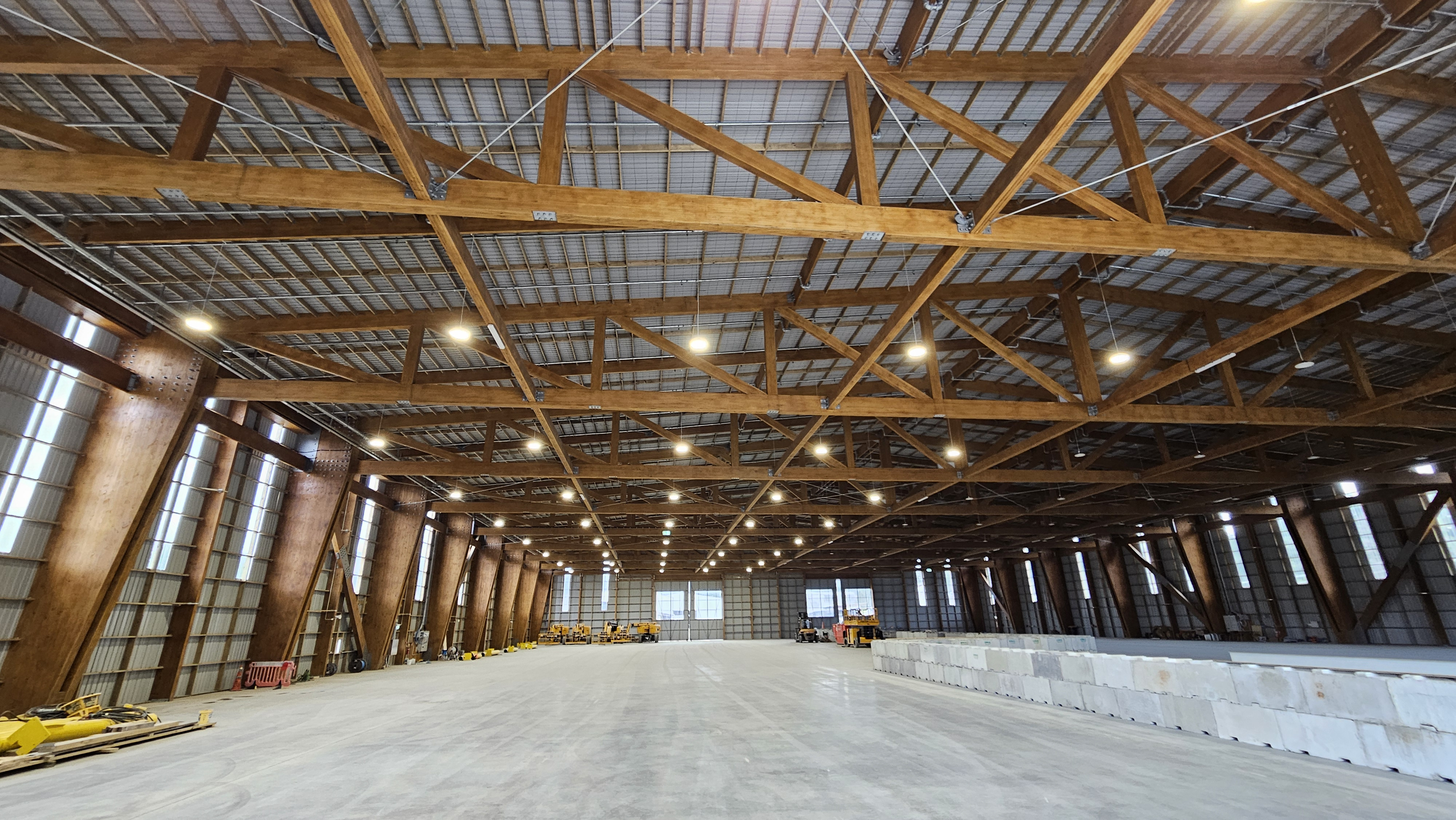
Mass Timber Industrial Building Optimisation
Project Big Span:
Cost-optimised industrial shed solution

Large-span industrial buildings are typically dominated by structural steel. Project Big Span explores whether hybrid timber–steel structural systems could provide a practical, lower-carbon and cost-competitive alternative.
Funded through the Mid-Rise Wood Construction programme, the MIBO white paper documents research undertaken by Red Stag TimberLab to investigate how engineered timber systems can be optimised for large-span industrial shed construction.
Read the full MIBO / Project Big Span white paper to explore the structural concepts, cost modelling, laboratory testing and commercial case study in more detail.
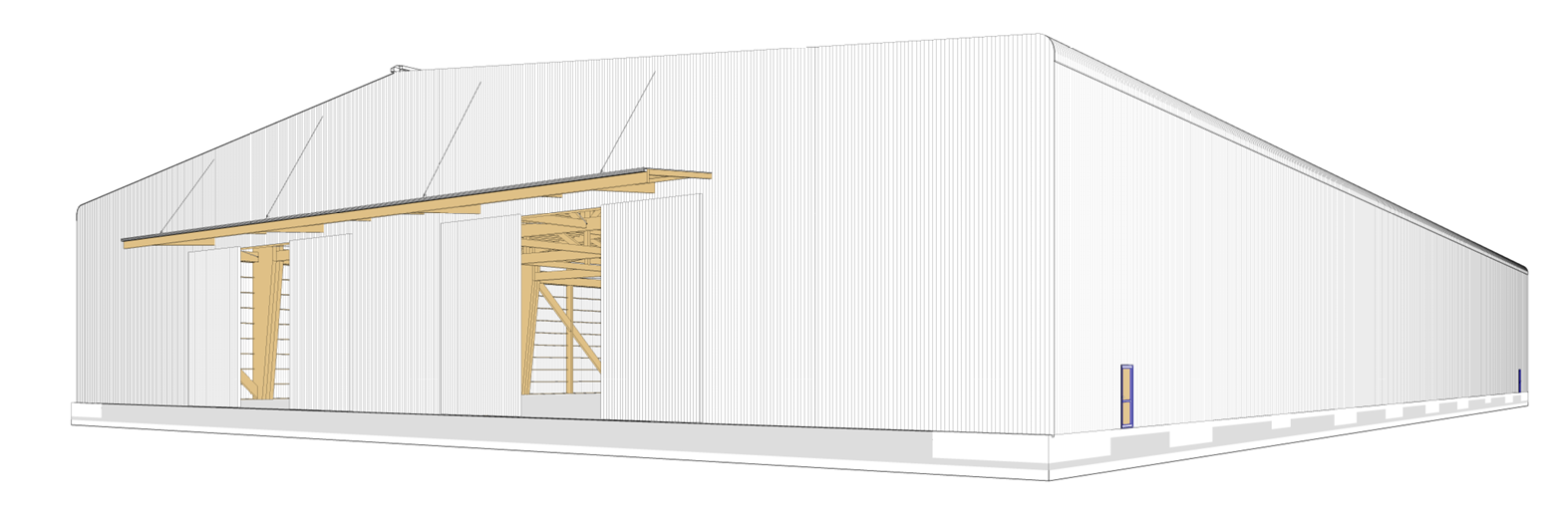
Key findings from the white paper
The research indicates that hybrid timber–steel systems have the potential to provide a practical pathway for large-span industrial buildings.
Key findings include:
The optimised hybrid system was modelled as 21.9% less expensive than the as-built timber solution.
The same system was modelled as approximately 2.6% cheaper than an equivalent steel portal frame structure, on a structure-only basis.
A commercial industrial case study indicated a potential embodied carbon reduction of approximately 651 tonnes of CO₂e compared with the steel alternative.
Laboratory testing helped validate the composite behaviour between the CLT web and steel flange elements.
Further full-scale testing and development remain part of the pathway to market.
Who should read the white paper
This resource is relevant for:
Developers and industrial building owners assessing structural options
Structural engineers working on large-span industrial buildings
Architects interested in lower-carbon industrial design
Quantity surveyors reviewing structure-only cost comparisons
Contractors and suppliers involved in timber or hybrid construction
Project teams looking for practical pathways to reduce embodied carbon
Why this research was needed
The Red Stag Dry Store demonstrated that large-span mass timber industrial construction is technically feasible. The 65m clear-span building successfully showed how Glulam and CLT could be used in a large industrial shed application.
However, post-construction cost analysis found the as-built timber structure was 19.3% more expensive than an equivalent steel portal frame on a structure-only basis.
Project Big Span was developed to address that commercial challenge. Rather than simply proving timber could work, the research focused on how timber and hybrid timber–steel systems could be optimised to compete more directly with conventional steel.
What Project Big Span investigated
The project assessed a range of structural frame options, including different column and rafter configurations using Glulam, CLT and steel.
The most promising option identified was a hybrid CLT–steel I-beam system. This system uses a CLT web with steel flanges, combining the strengths of both materials to improve structural efficiency, cost competitiveness, and embodied carbon performance.
A practical pathway to adoption
Why it matters
The white paper also outlines a rafter-only hybrid solution as an initial commercialisation pathway.
This approach would replace conventional steel rafters with hybrid CLT–steel beams while retaining steel columns. By keeping some details closer to conventional steel portal frame construction, the rafter-only pathway is intended to reduce design novelty, support easier tendering and consenting, and allow hybrid timber systems to be introduced incrementally.
For industrial buildings, cost, constructability, and procurement all shape material decisions.
This white paper provides practical research into how timber and hybrid timber–steel systems could be designed to better compete in large-span industrial applications. It does not position timber as the automatic answer for every project. Instead, it explores how smarter structural optimisation could help keep lower-carbon timber solutions commercially viable.


